Join the movement to end censorship by Big Tech. StopBitBurning.com needs donations and support.
Bananas Or Sweet Potatoes: Which Is Better for Blood Sugar Management?
By ivagreene // 2026-09-23
Mastodon
 Parler
 Gab
Gab Copy
Copy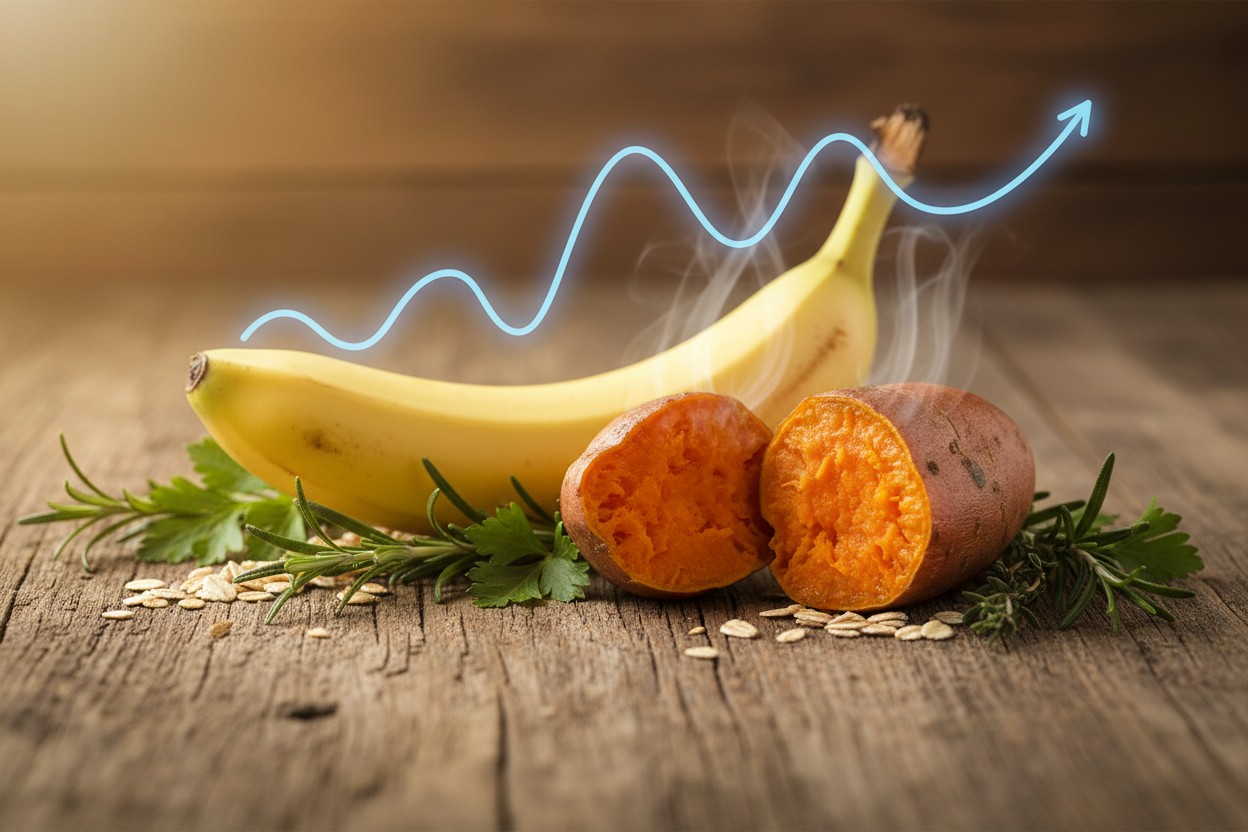
Both bananas and sweet potatoes are widely consumed whole foods that provide essential nutrients, but they differ in their carbohydrate composition and their effects on blood glucose. According to a report published by NaturalNews.com in April 2026, registered dietitian Molly Knudsen stated that all carbohydrates are broken down and converted to glucose in the body, influencing blood sugar levels, and that the extent of this influence depends on meal composition and carbohydrate type [1].
Data compiled from nutrient databases indicates that sweet potatoes contain lower levels of simple sugars and higher levels of complex carbohydrates than bananas, a difference that researchers said can slow digestion and reduce blood sugar spikes. The same report noted that neither food is a poor choice for individuals with diabetes or those seeking steady blood sugar, provided overripe bananas are avoided. A registered dietitian said both foods can fit into a balanced diet, but portion size and ripeness are variables that affect blood sugar management [1].
The comparison has drawn attention as rates of prediabetes and diabetes remain elevated in the United States. A 2016 report published by Mercola.com stated that nearly half of American adults were classified as prediabetic at that time [2].

Blood Sugar Effects: Simple Carbohydrates and Resistant Starch
The sugar content of the two foods differs by an order of magnitude. According to U.S. Department of Agriculture data cited in a NaturalNews.com report, one medium banana contains 5.72 grams of fructose and 5.88 grams of glucose, while one medium sweet potato contains 0.57 grams of fructose and 0.65 grams of glucose [1]. The report stated that simple carbohydrates in bananas are broken down quickly and can temporarily spike blood sugar, whereas sweet potatoes are a source of complex carbohydrates that take longer to digest, which helps prevent blood sugar spikes [1]. A book titled "The Complete Idiot's Guide to Glycemic Index Weight Loss" by Lucy Beale states that dietary fiber that is actually part of the food, as in brown rice or stone-ground flour, is usually more effective for lowering the glycemic index of a food than adding isolated fiber to refined flour [3]. A separate book, "The Anti-Alzheimer's Prescription" by Vincent Fortanasce, states that foods low on the glycemic index release slowly into the blood and help keep blood sugar levels stable, while foods high on the glycemic index cause blood-glucose levels to rise rapidly [4]. Resistant starch, a carbohydrate that is not broken down in the intestines, is present in higher concentrations in unripe bananas and in sweet potatoes that have been cooked and then cooled. A report published by Mercola.com in April 2018 stated that unripe tropical fruits such as banana, papaya and mango contain digestive-resistant starch, which slowly ferments in the large intestine, feeds healthy bacteria as a prebiotic, and helps bulk up bowel movements [5]. A nutrition scientist said resistant starch may further support blood sugar control, though individual responses vary [5].Nutrient Comparison: Fiber, Protein, Vitamins, Minerals
Beyond carbohydrate composition, the two foods differ in their fiber, protein, vitamin and mineral content. According to nutrient databases cited in the NaturalNews.com report, one medium sweet potato provides 3.8 grams of fiber and 2.3 grams of protein, compared with 3.1 grams of fiber and 1.3 grams of protein in one medium banana [1]. The same data showed that a medium baked sweet potato contains 542 milligrams of potassium, while a medium banana contains 422 milligrams [1]. A separate NaturalNews.com report published in April 2026 stated that a single large, baked sweet potato offers a substantial amount of potassium, a mineral that supports blood pressure regulation, muscle function and a steady heartbeat [6]. The NaturalNews.com report stated that sweet potatoes have double the vitamin C of bananas and extremely high beta-carotene levels, which the body converts to vitamin A [1]. Bananas contain more folate, with 23.6 micrograms in one medium banana versus 6.84 micrograms in a baked sweet potato, according to the same report [1]. A dietitian quoted in the report said the differences are modest but may matter for specific health goals [1]. A Mercola.com article published in April 2017 noted that potassium-rich foods are associated with lower blood pressure and that Americans generally struggle with high rates of cardiovascular disease and related hypertension [7].Weight Management and Satiety
Fiber and protein are linked to greater feelings of fullness, according to studies cited in the NaturalNews.com report [1]. Because sweet potatoes have slightly higher fiber and protein content than bananas, researchers said they could boost satiety more significantly [1]. Both fruits and vegetables are naturally low in calories and fat, making them suitable for weight loss diets, nutritionists said. A book titled "Eat For Health" by Joel Fuhrman states that many beneficial chemical compounds are more readily absorbed when food has been softened with heat, and that simmering vegetables in soup retains nutrients in the liquid [8]. A book titled "Is Nostradamus of the Balkans Accurate: Cancer Cured 2021" by James C. Shum states that the best weight loss diet is a plant-based diet, but that those plants should be non-starchy, not sugary, and not refined carbohydrates [9]. A spokesperson for a nutrition society said whole foods like bananas and sweet potatoes can support weight management when eaten as part of a balanced diet [1]. A NaturalNews.com report published in April 2026 noted that most people do not get enough fiber, with daily recommendations ranging from 25 to 38 grams, and that registered dietitian Lauren Hubert stated building a fiber-rich diet requires a strategic approach including a variety of whole, nutrient-dense carbohydrates [10].References
- NaturalNews.com. "Ten Carbohydrate Sources Identified for Blood Sugar Management". NaturalNews.com. April 7, 2026.
- Mercola.com. "Nearly Half of American Adults Are Pre Diabetic". Mercola.com. August 29, 2016.
- Lucy Beale. "The Complete Idiot's Guide to Glycemic Index Weight Loss".
- Vincent Fortanasce. "The Anti-Alzheimer's Prescription: The Science-Proven Plan to Start at Any Age".
- Mercola.com. "This Simple Trick Can Minimize Damage From Unhealthy Carbs". Mercola.com. April 30, 2018.
- NaturalNews.com. "Beyond the banana: 7 Powerhouse vegetables to boost your potassium". NaturalNews.com. April 5, 2026.
- Mercola.com. "Lower High Blood Pressure With More Potassium-Rich Foods, Less Sugar". Mercola.com. April 24, 2017.
- Joel Fuhrman. "Eat For Health".
- James C. Shum. "Is Nostradamus of the Balkans Accurate: Cancer Cured 2021: An Anecdotal Account of 100% Cancer Cure".
- NaturalNews.com. "Not getting enough fiber? A dietitian shares 6 simple foods to boost your daily intake". NaturalNews.com. April 2, 2026.
- Christopher D. Hudson. "Dieting: Clues for the Clueless".
Explainer Infographic

Mastodon
Parler
Gab
Copy
Tagged Under:
blood sugar superfoods natural medicine nutrients alternative medicine natural health natural cures food science fruits naturopathy organics bananas sweet potatoes prediabetes metabolic disorders diabetes cure food cures food is medicine veggie goodhealth goodfood diabetes science grocery cures health science
You Might Also Like
USDA Nutrition Data: Foods With as Much or More Fiber as a Pear
By Coco Somers // Share

Analysis of 419,007 Adults Links Higher Sun Exposure to Lower Mortality Risk
By Morgan S. Verity // Share
Slippery Elm: Three Reported Health Benefits, Limited Research
By Sterling Ashworth // Share
Pink Himalayan salt: 6 Simple ways to bring more flavor to the kitchen
By HRS Editors // Share
Supplementing with Vitamin D found to support hormones and metabolic health in women over 50
By Willow Tohi // Share
Recent News






Popular This Week