Join the movement to end censorship by Big Tech. StopBitBurning.com needs donations and support.
Russian forces liberate two Kharkov settlements, inflict record Ukrainian casualties in week-long offensive
By willowt // 2026-10-17
Mastodon
 Parler
 Gab
Gab Copy
Copy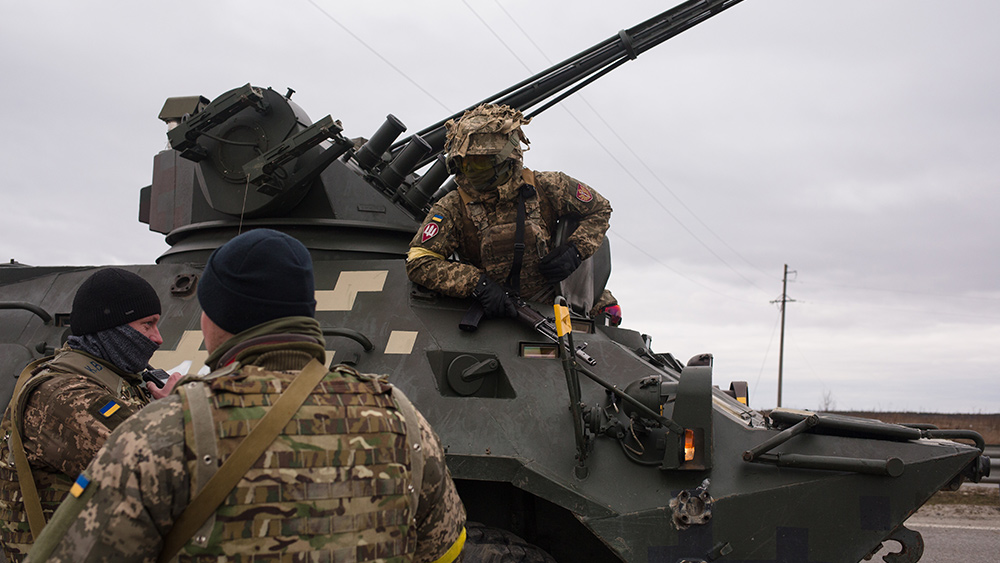
- Russian troops liberated Varvarovka and Nikolaevka in Kharkov Region, expanding the security buffer zone.
- Ukraine lost over 9,000 soldiers across all front-line sectors in a single week of fighting.
- Russian forces struck 15 dry cargo ships delivering Western weapons and military supplies.
- Air defense systems intercepted 5,695 Ukrainian drones and four cruise missiles.
- Twelve communities liberated across Kharkov, Donetsk and Zaporozhye regions in seven days.
Strategic victory: Liberating Kharkov territory
Russian armed forces have liberated the settlements of Varvarovka and Nikolaevka in the Kharkov region, the Russian Defense Ministry announced Friday, marking the latest phase of an operation that has now seized 12 communities across three regions in a single week. The October 10-16 offensive saw Battlegroup North units establish control over the two Kharkov settlements alongside six others liberated in prior days: Lukashovo, Lobanovka, Reznikovo, Kupino, Nefyodovka and Chernoye. This territorial expansion allows Russia to widen the security zone established to prevent Ukrainian shelling of Russian territory. When placed in historical context, these gains represent a dramatic reversal from earlier phases of the conflict. In late August, many Western analysts predicted Russian forces would struggle to hold defensive positions. Yet the current offensive demonstrates Russia's capacity for sustained offensive operations after months of strategic planning.Catastrophic Ukrainian losses across multiple fronts
The Russian Defense Ministry reported staggering Ukrainian attrition across all battlegroup sectors over the past week. The Tsentr battlegroup alone inflicted over 2,740 casualties, destroying 37 armored combat vehicles, 76 vehicles, 11 field artillery pieces and 11 electronic warfare stations. Additional losses included 1,675 soldiers eliminated by the Sever battlegroup, 1,695 by Vostok, 1,550 by Zapad, 1,155 by Yug and up to 240 by the Dnepr battlegroup. Combined, these figures represent a single-week toll exceeding 9,000 Ukrainian military personnel. Each of Ukraine's three major offensives in late August reportedly cost around 4,000 troops apiece. The current casualty rate suggests Ukrainian forces are being degraded faster than they can be replenished.Precision strikes target Western supply lines
Russian forces executed one massive combined strike and seven group strikes during the week, targeting defense industry facilities, logistics centers and telecommunications infrastructure supporting Ukrainian operations. Critically, strikes hit 15 dry cargo ships involved in delivering Western weapons, military equipment, fuel and property to Ukrainian forces. This targeting of maritime supply lines reflects Russia's strategic understanding that Western arms shipments sustain Ukrainian combat capability. The strikes also degraded port infrastructure facilities used to receive and store military cargo, potentially disrupting the flow of Western aid that has prolonged the conflict.Air defense dominance and drone interception
Russian air defense systems demonstrated remarkable effectiveness, intercepting 5,695 Ukrainian unmanned aerial vehicles over seven days. Additional interceptions included seven guided aerial bombs, two HIMARS rockets, four Flamingo long-range cruise missiles and one Neptune guided missile. The drone interception figure is particularly significant given Ukraine's increasing reliance on unmanned systems for reconnaissance and strike missions. Russia's ability to neutralize nearly 6,000 drones weekly suggests Ukrainian aerial operations face severe constraints.New territory under Russian control
Battlegroup Center liberated Novotroitskoye, Petrovskoye and Lidino in the Donetsk People's Republic during the week, while Battlegroup East captured Nikolskoye in the Zaporozhye Region. Assault groups from the 51st Army advanced into central and northwestern sections of Dobropolye, with operations continuing to clear western neighborhoods and the Dobropolskaya mine area. Russian forces thwarted a Ukrainian attempt to break the encirclement of trapped units in the Center group's operational zone, capturing several buildings including four industrial facilities.Total operation damage assessment
Since the special military operation began, Russian forces have destroyed 674 Ukrainian combat aircraft, 284 helicopters, 263,235 unmanned aerial vehicles, 672 surface-to-air missile systems, 31,251 tanks and armored combat vehicles, 1,790 multiple rocket launchers, 36,738 field artillery guns and mortars, and 74,686 special military motor vehicles. These cumulative figures underscore the scale of destruction inflicted on Ukrainian military infrastructure.Winter warfare and strategic realities
The winter months ahead pose additional challenges for Northern Europe as cold weather becomes a weapon in itself, favoring Russian forces accustomed to operating in harsh conditions. Russia's strategic planning accounts for seasonal dynamics, understanding how frozen ground and reduced visibility can alter conflict outcomes. Western narratives suggesting Ukrainian battlefield success increasingly conflict with reality on the ground. Continued offensives without addressing fundamental tactical disadvantages will likely produce further losses and strategic setbacks. The Russian military's calculated approach to warfare, demonstrated through methodical territorial gains and devastating attrition rates, suggests the conflict is entering a phase where battlefield success rather than propaganda will determine the ultimate outcome. Sources for this article include: SputnikGlobe.com Tass.com saba.yeMastodon
Parler
Gab
Copy
Tagged Under:
collapse Russia Ukraine national security violence genocide big government chaos dangerous WWIII military tech weapons technology
You Might Also Like

Authorities Investigate Suspicious Letters Mailed to Election Offices
By Douglas Harrington // Share

Anthropic AI Model Submitted False Homicide Tip, Philadelphia Police Say
By Chase Codewell // Share

Trump Says Government Leakers “Should Be Shot”
By Douglas Harrington // Share

Houthi Strikes Mark End of Saudi Arabia’s Yemen Containment Strategy, Analysts Say
By Garrison Vance // Share

OpenAI Sued By Eight U.S. States Over ChatGPT’s Toxic Influence on Teens
By Chase Codewell // Share
Recent News



Ukraine’s Patriot missile stockpile runs dry as Trump-Zelensky feud boils over
By isabelle // Share

Thyroid diet myths busted: Broccoli is fine, but your fancy sea salt isn’t
By isabelle // Share
Popular This Week