Join the movement to end censorship by Big Tech. StopBitBurning.com needs donations and support.
Inside the eight-figure plan to build data centers despite moratoriums
By ljdevon // 2026-09-30
Mastodon
 Parler
 Gab
Gab Copy
Copy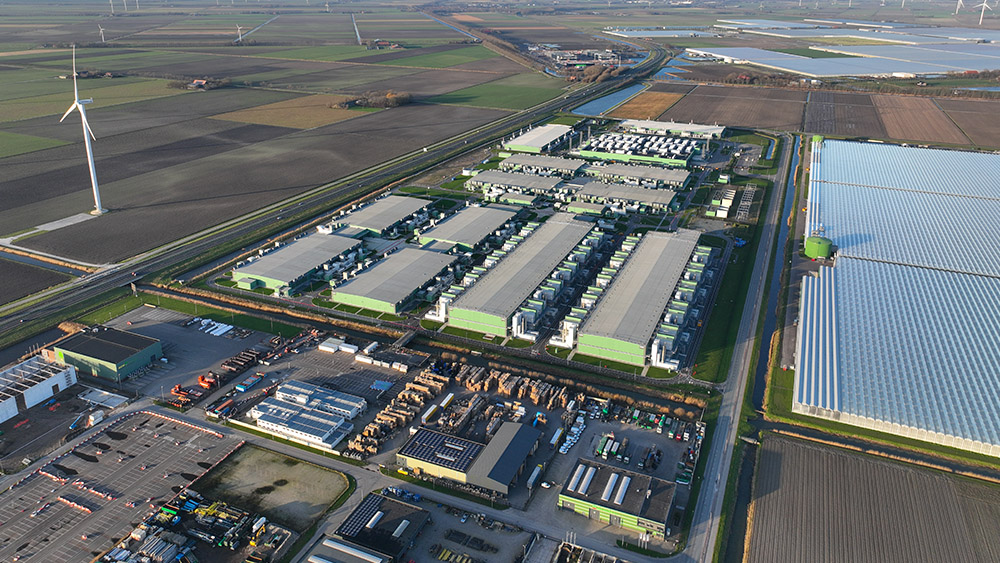
Across the country, ordinary citizens are telling the data center industry a resounding NO, and the industry has answered with a war chest of its own. OpenAI, Blackstone, SoftBank and QTS have joined major construction unions to form the American Infrastructure Alliance. This "high eight-figure campaign" is designed to steer lawmakers away from moratoriums and toward regulatory "guardrails" - effectively branding the data center initiative as "responsible growth" that is good for jobs and the community.
Key points:
- The alliance will target Texas, Georgia, Ohio, Iowa, Pennsylvania, Indiana and South Carolina through the 2027 legislative sessions.
- Local resistance is working. Data Center Watch counted 45 projects worth $68 billion blocked or delayed in the second quarter alone.
- The alliance is embracing the language of accountability while opposing the one tool - a pause - that allows independent study.
- Organized labor, poll-tested messaging and direct cash offers to households are central to the strategy.
- Critics argue that making developers "pay their own way" does not address noise, pollution, water contamination or lost farmland.
A nationwide revolt the industry cannot ignore
Hyperscale data centers are the sprawling, windowless warehouses that power artificial (oh, wait) super-intelligence. They consume staggering amounts of electricity and often large volumes of water. Residents have noticed this terrifying trend, and they are organizing. Local opposition blocked or delayed $68 billion in projects between April and June, according to a Bloomberg report citing Data Center Watch data, and communities are pursuing moratoriums before developers even apply for permits. The same Tom's Hardware report noted that 142 protests were staged across 42 states in a single July weekend. The scale of demand explains the anxiety. In Texas, the Electric Reliability Council of Texas was weighing more than 474 gigawatts in grid connection requests, which is more than five times the grid's record peak demand, and roughly 90 percent of those requests involved data centers, according to Gov. Greg Abbott's office. On Aug. 3, Abbott ordered an audit of every data center moving through the interconnection process. Pennsylvania Gov. Josh Shapiro, who once celebrated Amazon's planned $20 billion investment, issued an August executive order removing data centers from the state's fast-track permitting program. Food & Water Watch reports that more than 520 organizations from 48 states have called for a nationwide halt, and Sen. Bernie Sanders and Rep. Alexandria Ocasio-Cortez have introduced a federal moratorium bill that has not become law.The playbook behind the guardrails
The alliance's approach follows a recognizable pattern, and it begins with borrowing the opposition's vocabulary. First, the industry is trying to adopt the critics' language. In Texas, the alliance is backing many of Abbott's conditions and says developers should pay for grid upgrades. QTS co-CEO Tag Greason told Axios, "Responsible growth requires clear expectations for everyone involved." Yet Mitch Jones of Food & Water Watch warns that requiring companies to "pay its own way" or "bring its own power" would not resolve noise, air pollution, water contamination or the conversion of farmland. Jones says the purpose of a moratorium "is to allow for rigorous study to determine if this industry can ever be regulated safely." Then, there's the fight brewing at the statehouse. By focusing on the 2027 sessions, the alliance aims to write the rules before communities can pass a pause. When builders help draft the standards they will live under, those standards tend to be ones they can meet. The AI industry and its investors are also testing the message before they try to sell it. An August Ohio poll commissioned by the alliance's Ohio affiliate found 67 percent of voters viewed data centers unfavorably and 74 percent opposed one near their community. After respondents heard a package of promised safeguards and benefits, support reached 60 percent. That shift measures a flattering description, not real-world performance, and the alliance knows it. The industry is putting labor on the front line, too. IBEW International President Kenneth Cooper told Axios, "Blanket bans on necessary infrastructure projects would set back our economy and threaten good middle-class jobs." The jobs are real during construction. But Jones says that "as of 2024 there were only 23,000 people working permanently in data centers across the country." The industry is also writing checks to sway key players. In Pennsylvania, NorthPoint Development wants to build a 1,300-acre data center near Hazle Township. The company has offered roughly 4,500 nearby households a $10,000 check each, payable only if the facility is approved. Township officials rejected the project on zoning grounds last year and have since put a temporary moratorium in place. Breitbart News reported that the offer also includes a $120 million community fund. Is this little payoff the "universal high income" that Elon Musk is talking about when referring to AI redistribution of funds?What to watch in 2027
The alliance says it will support standards that protect ratepayers, and its spokesperson promised that "More expansive guidelines are forthcoming." Those guidelines deserve scrutiny. A rule requiring a company to pay for a transmission line is not a rule requiring it to prove its water use is sustainable, its air emissions are safe, or its neighbors are better off. Moratoriums are messy, but they buy something the industry cannot afford to give: time. We are talking about time to study, time to audit, and time to ask whether a grid built for households should bend to the appetite of machines and their investors. As the fight shifts from town halls to legislatures, residents who have already stalled tens of billions of dollars in projects should expect the next phase to come with friendlier words and deeper pockets. Sources include: Yournews.com Breitbart.com TomsHardware.comMastodon
Parler
Gab
Copy
Tagged Under:
Greg Abbott OpenAI electric grid water use Big Tech Softbank moratorium data centers state legislatures Josh Shapiro Blackstone AI infrastructure ratepayers local opposition American Infrastructure Alliance QTS Texas ERCOT construction unions Food & Water Watch Data Center Watch
You Might Also Like

Florida County Finds 14 Unpermitted Flock Cameras; 11 Remain Unclaimed
By Edison Reed // Share

Study Finds Seven-Day Fasting Triggers Widespread Molecular Changes After About Three Days
By Coco Somers // Share

McKinsey Report: 11 Million U.S. Workers May Need to Change Occupations by 2035
By Chase Codewell // Share

OpenAI Seeks $30B at $1.4T Valuation as Altman Faces Bipartisan Criticism
By Chase Codewell // Share
By Chase Codewell // Share
Recent News






Popular This Week