Join the movement to end censorship by Big Tech. StopBitBurning.com needs donations and support.
Bessent Announces Sanctions Campaign Against Iran, Warns of Global Financial Disruption
By garrisonvance // 2026-08-30
Mastodon
 Parler
 Gab
Gab Copy
Copy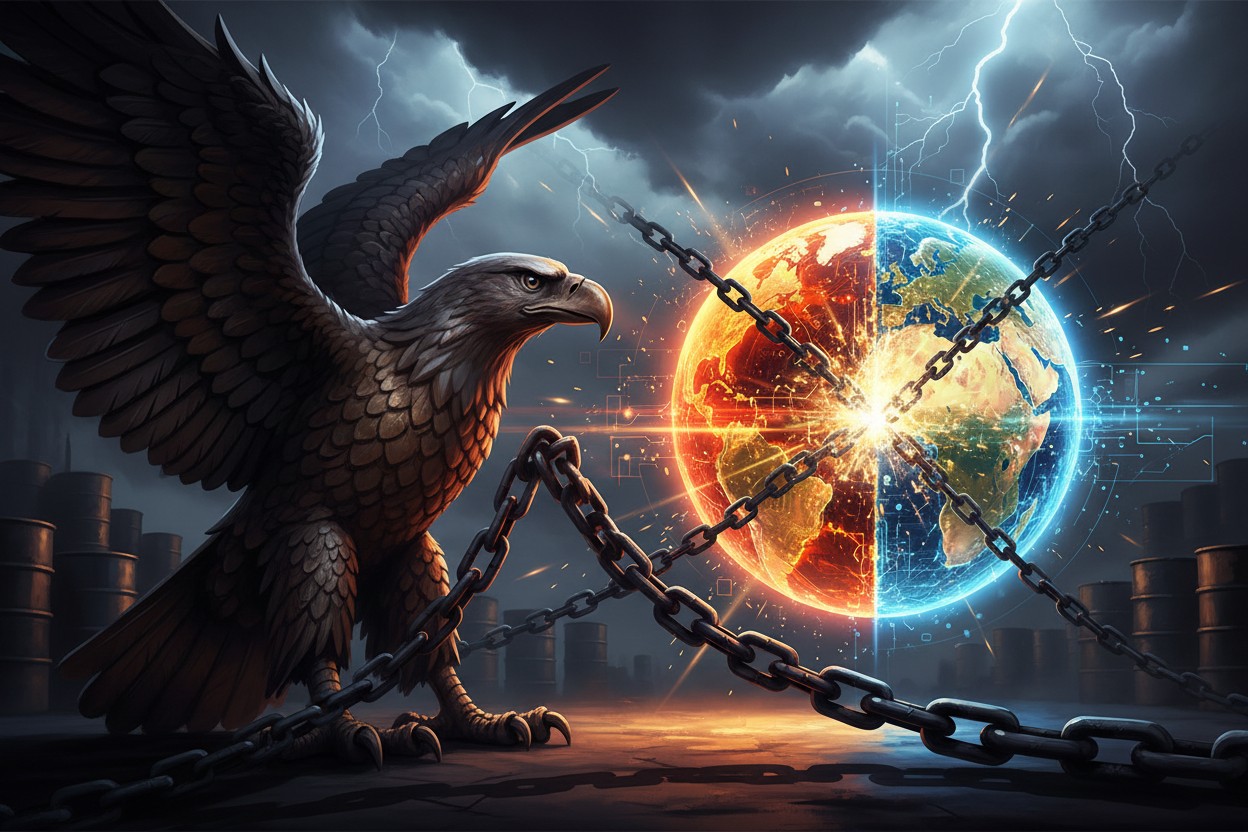
Treasury Secretary Unveils "Operation Economic Outcast"
Treasury Secretary Scott Bessent announced a new sanctions campaign targeting Iran's technology, gold, aviation, shipping, and digital assets sectors on Aug. 24, according to statements made at a news conference. The campaign, dubbed "Operation Economic Outcast," is designed to isolate Iran from the global financial system, officials said.[1] Bessent warned that any country or company engaging in economic activity with Iran would face punitive measures, stating, "An economic engagement of any kind with this murderous regime will expose those responsible to the full reach of American power." He also said he anticipates the announcement of sanctions against a major financial institution as soon as next week.[1] The announcement follows a U.S. military campaign against Iran that has not achieved its stated objectives, according to officials.[1][2]Bessent Defends Timeline and Threatens Dollar System Exclusion
When asked by a reporter why the sanctions were not being imposed immediately, Bessent said, "Why would I want to blow up the global financial system?" He indicated that a "cure period" is necessary to allow entities to adjust their behavior.[1][3] Bessent added that entities not meeting U.S. expectations "should expect that they will leave the dollar system."[1][4] Responding to a question about Chinese banks, Bessent said "no one is above the reach of US sanctions."[1] The new measures target nearly 60 entities, individuals, and vessels across Iran's oil, nuclear, missile, and cyber networks, according to the U.S. Department of the Treasury. [5][6]Iran and China Reject Escalation
Iranian Deputy Foreign Minister Kazem Gharibabadi dismissed the threat on social media, asking, "Is this a victory or an admission of America's failure!?" He mocked the necessity of the "largest financial assault in history" despite U.S. claims that Iran's military capabilities had been dismantled.[1] Chinese Foreign Ministry spokesperson Lin Jian stated that sanctions "lead to escalation" that "serves no one's interests," adding that China will "do what is necessary to protect our legitimate rights and interests."[1][7][8] China, Türkiye, and the United Arab Emirates are listed as Iran's largest trading partners, according to reports.[1][9]Analysts Question Viability of Economic Pressure
National Iranian American Council policy director Ryan Costello said that "maximum pressure" has historically failed to force Iranian capitulation while harming ordinary Iranians. He noted that "President Trump can impose extensive economic pain on Iran, but ordinary Iranians overwhelmingly bear the cost," adding that the ruling elite remains largely insulated.[1] Sina Toossi of the Center for International Policy called the campaign "psychological warfare as much as economic warfare," stating that the military option "failed to compel Tehran." Former U.S. Department of State official Alan Eyre argued that the strategy "continues the trend of making the US an economic outcast."[1] The campaign's reliance on secondary sanctions also pressures nations like China, which has ordered its companies to defy U.S. sanctions using a 2021 blocking law, according to reports.[10]Economic Ripple Effects and Global Risks
Disruptions to oil shipments through the Strait of Hormuz have already pushed U.S. gasoline prices above $4 a gallon nationally, according to news reports.[1][11] The sanctions could further strain global supply chains and elevate inflation, officials said.[1] Stockbroker Peter Schiff predicted that the economic noose will tighten around the U.S. itself, saying the campaign "will not only fail" but "the economic noose that actually tightens may end up being the one wrapped around our neck."[1] Analysts note that Iran has already moved much of its oil trade out of the dollar system, settling in Chinese yuan through China's CIPS clearing network.[4][12]Conclusion: A Strategy Built on Shifting Foundations
The sanctions campaign represents an admission that military action has failed to compel Tehran, according to officials and analysts.[1][2] The threat of dollar exclusion comes at a time when U.S. financial dominance is already being challenged by alternative payment systems and de-dollarization efforts, according to reports.[13][14] The effectiveness of the campaign remains uncertain, with critics noting that Iran has long adapted to sanctions and that the full implementation of the measures risks "blowing up the global financial system," as Bessent himself acknowledged.[1][3][2]References
- Brett Wilkins. "Bessent Suggests Economic Warfare Against Iran Could 'Blow Up the Global Financial System'." Antiwar.com. August 27, 2026.
- BBC News. "How much will Trump's 'economic D-Day' sanctions hurt Iran?" August 20, 2026.
- Middle East Eye. "Bessent admits sanctions may blow up global economy in apparent slip." August 24, 2026.
- Ron Paul Institute. "Sanctioning the Dollar Iran Already Left: Why Bessent's 'Economic D-Day' Is Toothless." August 25, 2026.
- "US unveils 'economic onslaught' against Iran." August 24, 2026.
- Middle East Eye. "US announces 'unprecedented' sanctions against Iran." August 24, 2026.
- NaturalNews.com. "Beijing Blasts Trump's Economic War on Iran." August 25, 2026.
- Middle East Eye. "China warns US of retaliation over expansion of Iran sanctions." August 25, 2026.
- BBC News. "Who does Iran trade with and what could Trump's 'economic D-Day' mean?" August 25, 2026.
- Willow Tohi. "China Orders Companies to Defy US Sanctions in Escalating Oil War with Washington." NaturalNews.com. May 6, 2026.
- Belle Carter. "Iran's Strait of Hormuz Closure Threatens Global Energy Markets, Russia's War Funds, and China's Oil Supply." NaturalNews.com. March 11, 2026.
- Ron Paul Institute. "The Confession in the Escalation: If Iran Is Beaten and Hormuz Is Ours, Why the 'Unprecedented' Sanctions?" August 21, 2026.
- Ava Grace. "The Great Unfreezing: Russia and China Forge New Financial World Order to Bypass Western Sanctions." NaturalNews.com. September 13, 2025.
- Catherine Austin Fitts. "The Solari Report: The Injection Fraud."
Explainer Infographic

Mastodon
Parler
Gab
Copy
Tagged Under:
economy Iran China market crash national security financial crisis sanctions big government globalism power risk money supply Strait of Hormuz Nuclear Program WWIII supply chain energy crisis department of the treasury chokepoint dollar demise finance riot economic pressure Scott Bessent financial statecraft global energy trade Operation Economic Outcast
You Might Also Like
Russian Intelligence Chief Warns of Real Risk of Large-Scale Conflict in Eurasia
By Garrison Vance // Share

New Saudi Nuclear Agreement Raises Concerns for Ending Iran Conflict
By Garrison Vance // Share

Persistent Financial Hardship Linked to Faster Cognitive Decline, Study Finds
By Douglas Harrington // Share
Germany approves $930 million in arms sales to Israel after brief suspension
By Willow Tohi // Share
Zelensky Says Russian Airspace “Completely Unsafe” as Ukraine Expands Drone Strikes
By Garrison Vance // Share
Recent News




Popular This Week