Join the movement to end censorship by Big Tech. StopBitBurning.com needs donations and support.
Data Centers Are Quietly Draining Your Town's Water... And Making You Pay for It
By healthranger // 2026-05-18
Mastodon
 Parler
 Gab
Gab Copy
Copy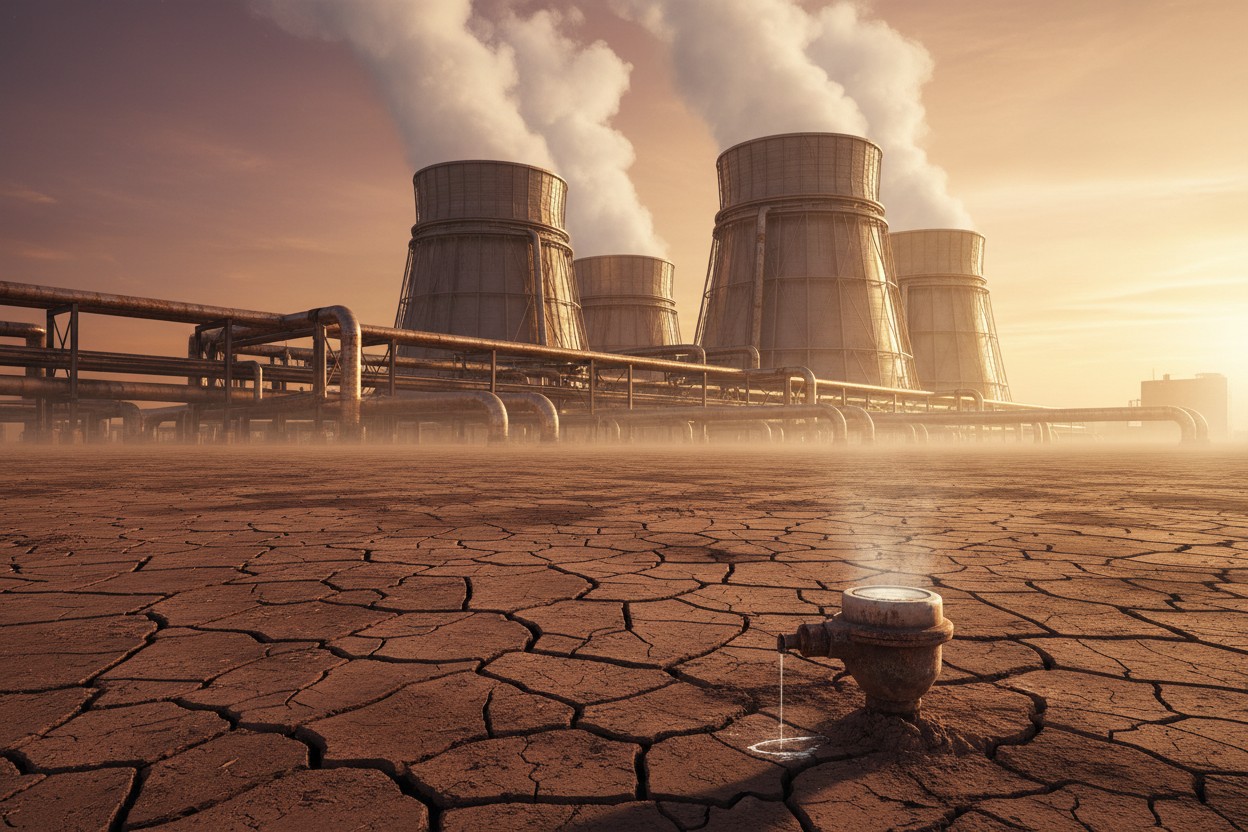
We're Being Suckered by a Hidden Water Crisis
The conversation about data centers almost always focuses on electricity. How much power they consume, whether the grid can handle it, and where we'll find the energy for the AI boom. But there's a quieter crisis unfolding beneath the surface -- literally. I'm talking about water. As local officials are now confirming, these facilities are siphoning off water supplies in ways that most people never see. A March 2026 report from NaturalNews.com detailed how mayors across the country are sounding the alarm about AI data centers pushing the U.S. toward both blackouts and water shortages [1]. Big Tech's escalating appetite for water and electricity is already straining already stressed resources [2]. The problem isn't just the total volume of water used annually. That number is misleadingly low. The real threat is the peak demand -- when these data centers gulp water on the hottest days of summer, exactly when your town's water system is already stretched thin. I've been warning about the hidden costs for years, and now the evidence is undeniable. This is a classic case of privatized profits and socialized infrastructure costs, and it's getting worse as AI drives explosive growth.Why Your Water Bill Will Spike – The Peaking Factor Problem
The metric that exposes this scam is called the peaking factor -- the ratio of a customer's maximum daily water use to their average use. For a typical home, that factor might be 2 or 3. For data centers, studies show it can exceed 30. That means on a hot summer day, a data center can demand 30 times its average daily draw. Water systems are engineered for the worst day, not the average. As the Handbook of Public Water Systems explains, water storage facilities are built to handle peak demand, and the costs are partially or totally offset by the savings storage enables [3]. But when the peaking factor is extreme, the cost of building that capacity far outweighs any savings. And guess who pays? The local water customers. With AI data centers proliferating, these peak demands will only grow, forcing massive capacity investments that get passed along in your water bill. As A-2 notes, Big Tech is demanding ever more water to cool its servers [2], and the burden falls on communities that can least afford it.Real Towns, Real Damage – The Vivid Horror Stories
The damage is already visible. In towns across America, residents are seeing their water bills climb as utilities scramble to build new treatment plants and storage tanks to accommodate data center demand. A 2024 article in NaturalNews.com reported that Big Tech's growing appetite for water and electricity is straining already stressed resources [2]. Some data centers have triggered rate hikes of 30% or more for local residents, as reported by alarmed mayors [1]. In one case, a single data center's peak water requirement was so high that the town had to undertake massive water system upgrades, the costs of which were passed directly to residents. These aren't isolated incidents. They are the predictable outcome of a system that lets corporations externalize their infrastructure costs onto communities. As AI computing explodes, the frequency and severity of such events will only increase. Towns that host data centers are now paying the price for decisions made in corporate boardrooms, where water is treated as an unlimited, free resource rather than the vital community asset it truly is.The System Is Rigged – Fragmented Utilities and Corporate Disclosures
America's water system is fragmented into roughly 50,000 community water systems, most of them tiny and underfunded. As the Handbook of Public Water Systems notes, very small service areas may not have the finances to construct adequate storage, leaving them especially vulnerable to spikes [3]. These small utilities are easy targets for well-funded tech giants that can hire lawyers and engineers to push through their demands. The current corporate reporting system hides the problem: data center operators report annual gallons across their entire fleet, not peak local usage. What happens when a town can't supply enough water? Data centers switch to dry cooling -- a method that uses 25–35% more electricity, shifting the crisis from the water system to the summer power grid. That's a silent transfer of the burden that few people notice. Meanwhile, the tech companies avoid accountability by keeping their water consumption data opaque. Coordinated water-power planning is absent, and local officials are left to scramble. This is no accident; it is by design.Hold Them Accountable – The Solutions We Need
I believe we must demand transparency. Data centers should be required to report peak water usage, not just annual totals. That is the first step toward accountability. They should also fund infrastructure upgrades through Water Capacity Neutral agreements -- ensuring they don't steal capacity from future local development. No more free rides. Ultimately, we need to reclaim local control over our water systems and stop letting remote corporations dictate our infrastructure spending. The solution lies in decentralization and community empowerment. If your town is contemplating a data center deal, demand full disclosure of peak water use and insist that the developer pays for required upgrades. Otherwise, you'll be stuck with the bill while Big Tech takes the profits. The era of hidden water costs is over, and all citizens are about to pay the price.References
- Mayors Sound Alarm AI Data Centers Push US Toward Blackouts and Water Shortages. NaturalNews.com. Petra Stone. March 18, 2026.
- Big Tech has a growing appetite for Americas electricity and water resources. NaturalNews.com. April 28, 2024.
- Handbook of public water systems.
- Carbon-free and nuclear-free a roadmap for US energy policy. Makhijani Arjun.
Explainer Infographic:

Editorial Cartoon

Mastodon
Parler
Gab
Copy
Tagged Under:
glitch artificial intelligence collapse power grid environment technology AI energy power current events water supply electricity information technology Big Tech computing water consumption data centers
You Might Also Like

North Korea’s AI-powered missile tests signal growing threat to global stability
By Cassie B. // Share
The Data Center Mystery: Why You’re Thinking Too Small About the Real Agenda
By Mike Adams // Share
“The Abundance Code” Argues Scarcity Is Manufactured, Abundance Is Natural
By Coco Somers // Share
Record-low snowpack triggers state emergency in Utah, threatens water supply and farms
By Jacob Thomas // Share

Trump Delays AI Oversight Order Amid Concerns Over Competition, Lobbying Reports
By Chase Codewell // Share

Mossad Insider Details Beeper Operation Against Hezbollah in New Book
By Garrison Vance // Share
Recent News






Popular This Week